

Table of Contents
The snow starts falling—heavy, wet, and fast—right around 4 p.m. You’re inching your way through the I-25/I-70 Mousetrap, a special kind of Denver hell on a good day, a full-blown demolition derby in a storm.
You’re doing everything right. You’ve left acres of following distance. You’re easing into your stops like the brake pedal is made of glass. You’re white-knuckling it, focused, present.
Then—wham.
Those headlights in your rearview were way too bright and way too close. Now your neck is throbbing, and your bumper is practically in your back seat. The other driver climbs out, throws up their hands, and says the six words every insurance company dreams of: “Roads are slick, what can you do?”
Right there, that’s it. That’s the entire defense strategy in a nutshell. They will grab onto that lazy excuse—that it was just the weather, an unavoidable accident, an “Act of God”—and try to ride it all the way to a denied claim.
They are wrong. Dead wrong. As a dedicated Denver winter car accident lawyer, my job is to prove it.
Your Crash Wasn't an Act of God—It Was an Act of Negligence
You know that feeling in your gut when the other driver slides through a stop sign and T-bones you? The one that tells you they should have known better than to drive like that in a Denver snowstorm?
That feeling isn’t just frustration. It’s the very foundation of Colorado law.
Insurance companies love to throw around phrases like “Act of God” or “unavoidable accident.” It’s a cynical, calculated attempt to make you feel like your crash was just bad luck. It’s a lie.
In Colorado, the law hinges on a simple, powerful principle: every driver has a legal duty to operate their vehicle in a safe and prudent manner for the conditions. When those conditions include a foot of fresh powder or a patch of black ice on a DU side street, that duty of care becomes higher—not lower.
The weather didn’t cause the accident. The other driver’s failure to respect the weather caused the accident.
When Is the Other Driver Legally Negligent?
Your instinct that the other driver was at fault is valid. Here’s what their negligence often looks like in the real world:
- Excessive Speed for Conditions: This is the big one. Driving 65 mph on I-70 during a whiteout isn’t just a bad idea; it’s a clear breach of their duty to you, even if the posted speed limit is 65.
- Improper Following Distance: The classic rear-end collision on an icy road is almost always the fault of the trailing driver. They failed to account for longer stopping distances, and you paid the price. Our firm specializes in dissecting the physics and legal arguments for when you are rear-ended on an icy road.
- Unsafe/Defective Equipment: This is a crucial, often overlooked factor. If the at-fault driver was on bald or dangerously worn tires, they knowingly put an unsafe machine on the road. This isn’t an accident; it’s a reckless choice.
They made a choice, and you paid the price. That’s negligence. Period.
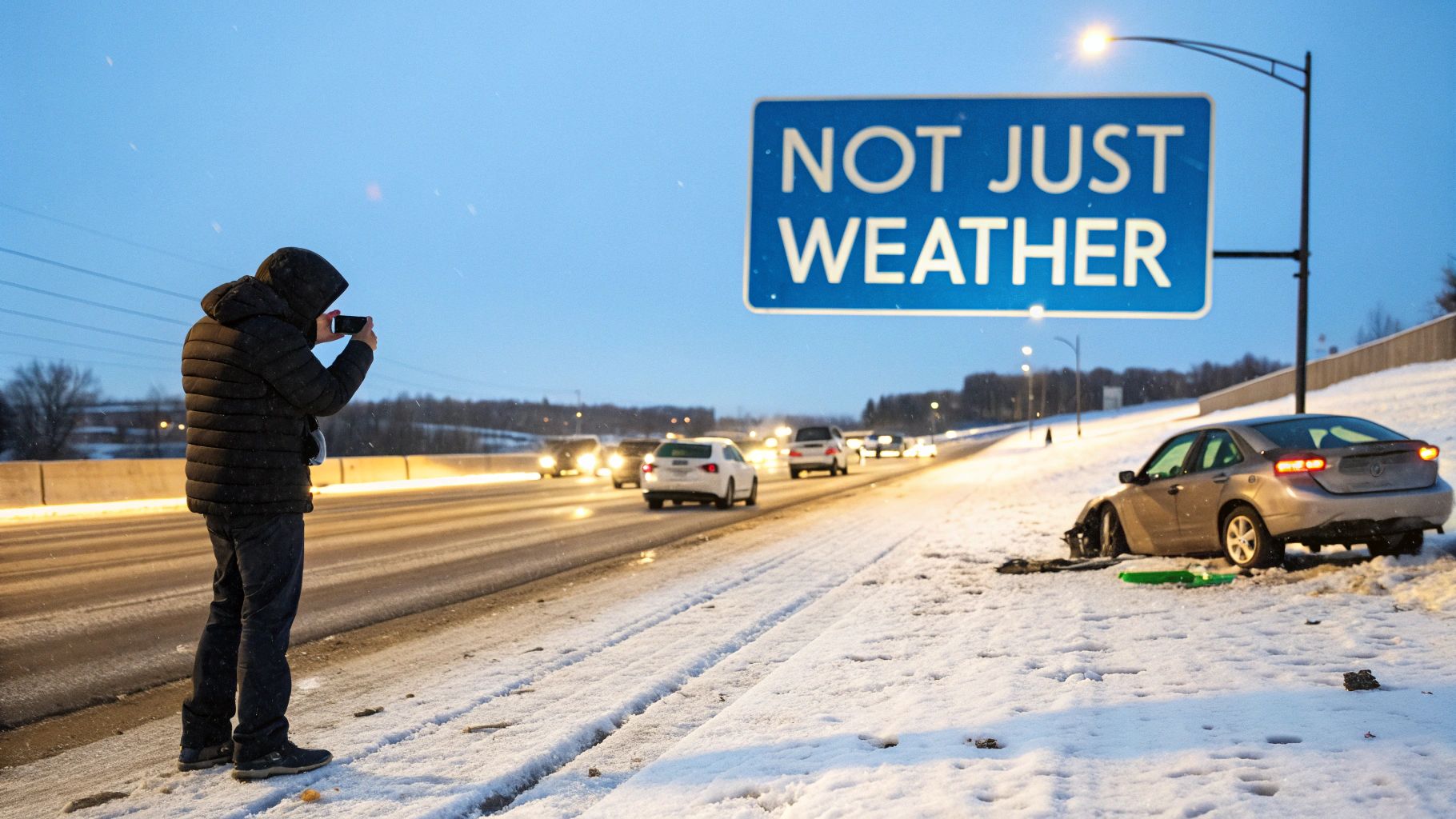
We Use Denver’s Reality to Dismantle Their Excuses
Winning your case isn’t just about knowing the law—it’s about knowing Denver. It's about understanding the specific, hyper-local dangers that define our winter commutes and using that knowledge to build an unshakeable case.
An insurance adjuster in Omaha doesn't know—or care—about the chaos of the Mousetrap during a snow squall. We do. They won’t think to look for the city maintenance logs for a specific off-ramp where black ice forms every year. We will.
This is the home-field advantage. Our strategy is grounded in Denver’s reality.
The Hyper-Local Evidence That Wins Cases
Insurance companies love to fall back on broad, lazy arguments. "It was the weather!" is a classic. We defeat them with specific, undeniable facts—evidence only a dedicated Denver attorney would know how to find.
- CDOT & City Traffic Cameras: Footage from cameras monitoring I-25 or Speer Boulevard is invaluable, but it’s often deleted within days. We move immediately to send preservation letters, securing digital proof of the other driver's reckless speed before it vanishes.
- Forensic Meteorology: We bring in experts who can create hyper-local weather reports for a specific intersection at a specific time. This proves that the black ice on that shaded Capitol Hill side street wasn't a surprise—it was a predictable result of a documented freeze-thaw cycle.
- Maintenance & Plow Logs: Was a particular stretch of I-70 recently treated or plowed? City and state records can establish road conditions and prove that other drivers were navigating the area safely, isolating the at-fault driver's behavior as negligent.
This isn’t just gathering paperwork. It's about telling a story so compelling that the insurance company’s “Act of God” defense sounds as ridiculous as it actually is.
Proving Fault in Complex Denver Scenarios
The other driver's insurance company will always have an excuse. Our job is to dismantle it.
- The Multi-Car Pileup on I-25/I-70: In a chain reaction, liability can almost always be traced back to the initial negligent driver. We use accident reconstruction to untangle the chaos and pinpoint the person whose mistake started it all.
- Black Ice on Ramps/Surface Streets: We prove liability by focusing on what a prudent driver should have known. Was it a shaded overpass after a sunny day? A notorious low spot after a freeze? We establish that the hazard was foreseeable, making the failure to slow down a negligent act.
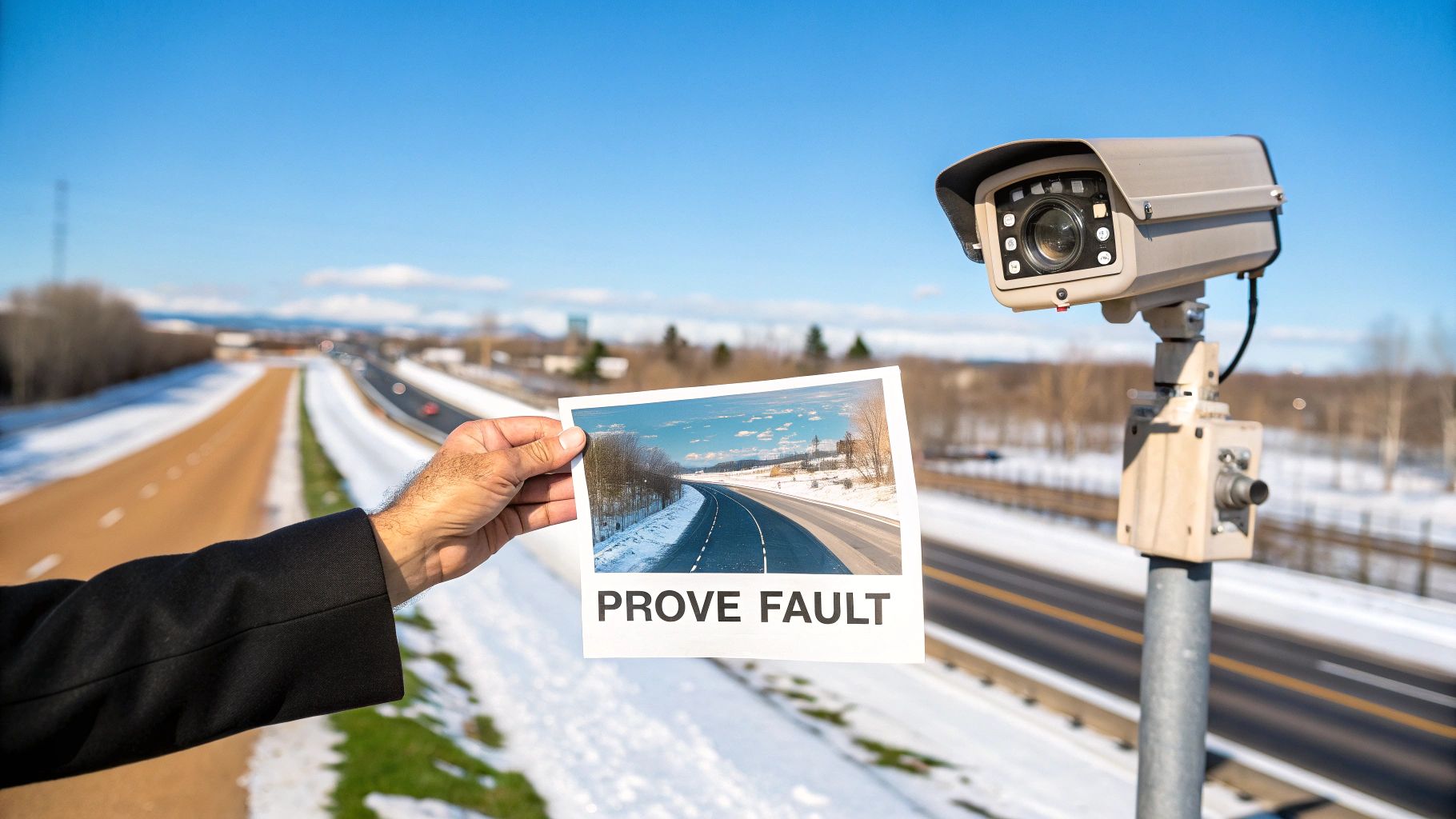
We use every tool—from hyper-local weather reports to black box data—to prove the other driver failed you.
The Trick Insurance Companies Don't Want You to Know
Get ready for the insurance adjuster’s favorite move. It’s a cynical little game called comparative fault, and it’s designed to do one thing: pay you less. Or better yet, nothing at all.
They’ll listen to your story. They’ll nod along. Then, they’ll gently suggest that maybe—just maybe—you were also a little bit to blame.
Maybe you were going one mile over the speed limit. Maybe you didn’t slam on your brakes the microsecond you saw the other car lose control. They will pick apart your every move, searching for any scrap of fault they can pin on you.
Why They Play the Blame Game
Here’s why they play this game so hard. Colorado operates under a modified comparative fault system. In plain English, that means as long as you are found to be less than 50% at fault, you can still recover money for your injuries.
But your final compensation is reduced by your percentage of fault. If a jury decides you were 10% to blame, your award gets cut by 10%.
And here’s the knockout punch: if the insurance company can convince a jury that you were 50% or more at fault, you get exactly zero. Nothing.
They aren't just trying to reduce your payout; they're trying to eliminate it completely. Their goal is always to shift blame and deny payment.
How We Shut Their Arguments Down
This is where a real trial lawyer earns their keep. We don’t just argue with the adjuster—we systematically dismantle their case with cold, hard evidence.
- Accident Reconstruction: We bring in forensic experts who prove the other driver's unsafe speed was the primary cause, not your reaction time.
- Witness Testimony: We track down everyone who saw what happened to establish a clear pattern of the other driver's reckless behavior.
- Vehicle "Black Box" Data: We move quickly to secure this data to get objective proof of speed, braking, and steering inputs from the at-fault vehicle.
- Local Weather and Road Data: We pull hyper-local meteorological reports and CDOT logs to show that road conditions, while challenging, were perfectly navigable for any driver exercising reasonable care.
Their goal is to shift blame and deny payment. For a deeper look into their tactics, you can learn more about why insurance companies deny claims in our detailed guide. We counter their strategy with undeniable proof.
The Steps That Secure Your Claim and Protect Your Rights
The moments after a winter crash are a chaotic blur. Adrenaline is pumping, and it’s easy to feel disoriented. But what you do right here, right now, will shape your entire case.
Your memory of the details will fade. The evidence—the slush, the ice, the skid marks—will literally melt away. You need a game plan.
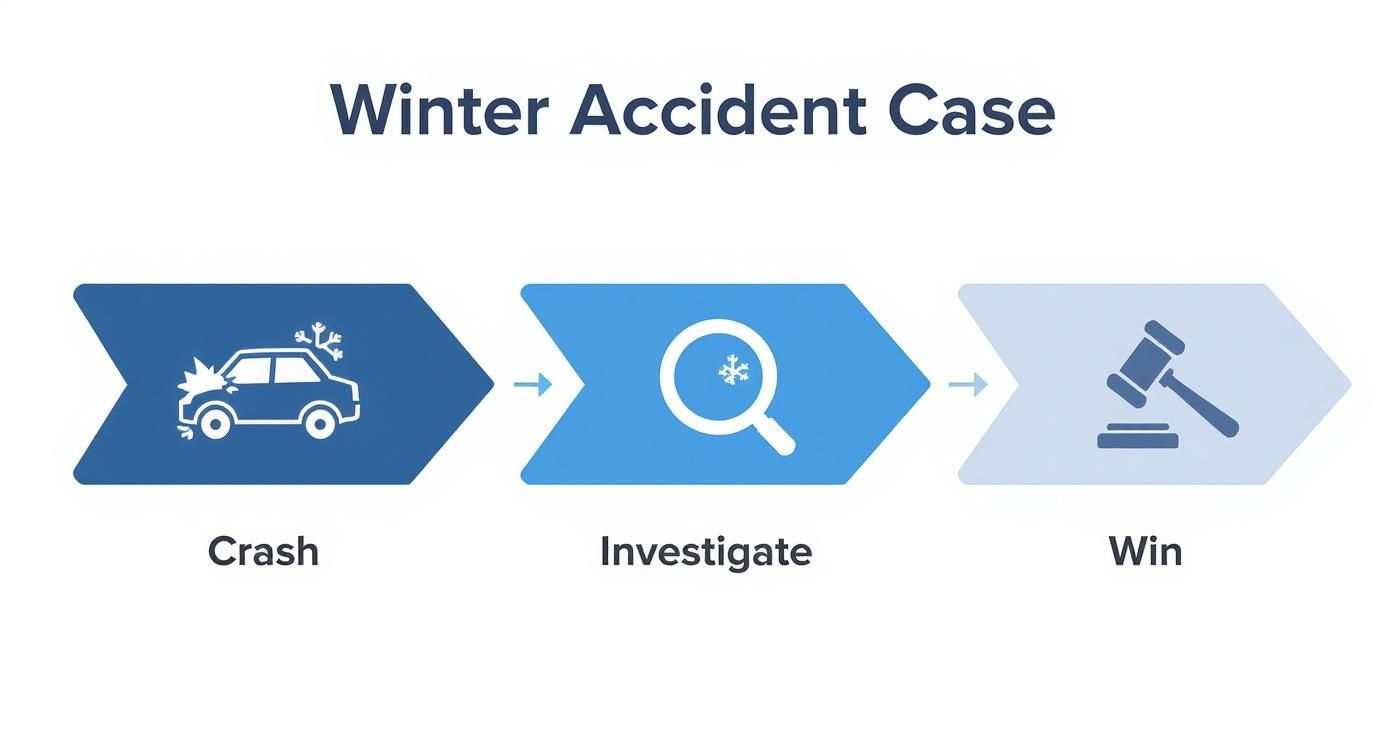
Your Immediate Action Checklist
Follow these steps to protect yourself from the insurance company's blame game before it even starts.
- Document the Scene Before It Vanishes: Pull out your phone immediately. Take photos and videos of everything before the plows arrive. Get wide shots showing the road conditions and car positions. Snow and ice are temporary evidence—capture them while you can.
- Photograph the Tires: This is a pro tip. Get clear pictures of the tire treads on all vehicles involved. Bald tires on the other car are powerful, direct proof of their negligence. It completely undermines the "I couldn't stop" excuse.
- Gather Witness Information: Get names and phone numbers from everyone. A single independent witness who saw the other driver going way too fast for the conditions can be the key to winning your case.
- Seek Immediate Medical Attention: Adrenaline is a powerful painkiller. You might feel fine at the scene only to wake up in serious pain the next day. Go to an urgent care clinic or the ER. If you delay treatment, the insurance company will argue you weren't really hurt. Don't give them that ammunition.
- NEVER Give a Recorded Statement: The other driver's insurance adjuster will call you, and they will sound incredibly friendly. Politely but firmly decline. Their only goal is to trick you into saying something they can twist and use to deny your claim later.
The single most important step? Call an experienced Denver winter car accident lawyer before you talk to anyone else. We handle the insurance company while you focus on getting better.
You need a specialist who handles the unique challenges of proving fault on icy roads, especially when city equipment is involved, which may require a dedicated Denver snow plow accident attorney.
Disclaimer: The information in this article is for informational purposes only and does not constitute legal advice. No attorney-client relationship is formed by reading or using the information on this site. You should consult with a licensed attorney for advice regarding your individual situation.
This is a lot, I know. You’re hurt, you’re stressed, and you’re staring down a fight you never asked for.
You don’t have to do it alone. Call my office. Let’s talk through what happened, and I’ll give you a straight, no-BS assessment of your case. The consultation is free. The peace of mind is priceless. I got you.
Written by
Conduit Law
Personal injury attorney at Conduit Law, dedicated to helping Colorado accident victims get the compensation they deserve.
Learn more about our team

