Table of Contents
That denial letter from the insurance company? It’s designed to feel like a brick wall. It’s often packed with confusing jargon and policy codes meant to make you feel overwhelmed and powerless. But here’s the truth the insurance industry doesn't like to advertise: a denial is not the end of the road. It’s just the start of the negotiation.

Here at Conduit Law, we've helped countless personal injury victims in Denver and across Colorado turn that initial "no" into the compensation they rightfully deserve. An insurer is testing you, hoping you'll get frustrated and walk away from your claim. Understanding that this is a calculated tactic is the first step toward regaining control. Our firm has recovered over $50 million for clients by fighting these exact battles.
Why Did They Deny Your Claim?
Insurance companies have a playbook of reasons for denying claims, from minor administrative slip-ups to major disputes over the facts. Before you can fight back effectively, you must understand exactly why they said no.
Colorado law requires the denial letter to spell out the specific reason for their decision. Don't just skim it—dissect it. The justification usually falls into one of these common buckets:
- Clerical Errors: A misspelled name, a wrong policy number, or a missing date of service. These seem minor, but they can trigger an automatic denial. The good news is they are often the simplest to correct.
- Lack of Medical Necessity: The insurer claims the treatment you received wasn't essential for your injuries. This is a classic tactic, especially in personal injury cases resulting from car or truck accidents.
- Policy Exclusions or Lapsed Coverage: They might argue that your specific injury or the way the accident happened isn't covered by your policy.
- Disputes Over Liability: In a Denver car accident case, the other driver's insurance might deny the claim by saying their client wasn't at fault.
Nailing down the exact reason is your first strategic move. It tells you what kind of evidence you need to collect and what arguments you’ll have to make. For a deeper dive, check out our guide on the common reasons why insurance companies deny claims.
Key Takeaway: Don't see the denial letter as a final rejection. See it as a roadmap. It tells you exactly what you need to prove to get their decision overturned.
The Power of an Appeal
It’s shocking how many people get a denial and just accept it, completely unaware that they have a real shot at winning if they appeal. The numbers are surprisingly on your side.
Research from KFF reveals that while insurers deny a huge number of claims, very few people actually file an appeal. But for those who do? Nearly half of all appeals result in the original denial being overturned during the internal review process alone.
This data tells a crucial story: insurance companies make mistakes, and their initial decisions can often be reversed with a well-organized, evidence-backed appeal. You have the right to demand they take a second look, and that’s often the key to getting the compensation you're owed.
Gathering Your Evidence for a Winning Appeal
A successful insurance appeal is built on cold, hard facts—not emotion. While getting that denial letter can feel deeply personal and unfair, the only effective way to fight back is with an organized, undeniable collection of evidence. This is your chance to build a case so strong it systematically dismantles the insurer's original reason for saying no.

Think of yourself as a detective building a case file. Every single document, from a simple pharmacy receipt to a complex MRI report, tells a piece of your story. Your job is to assemble these pieces into a coherent narrative that leaves the insurance adjuster with no logical choice but to approve your claim.
Start with the Insurer's Own Files
Your first move should always be a formal, written request for your complete claim file from the insurance company. This is a crucial step that far too many people overlook. This file contains every note, internal email, expert opinion, and piece of information the adjuster used to make their decision.
Getting this file accomplishes two key things. First, it shows you exactly what evidence they relied on, allowing you to spot any weak points or incorrect assumptions in their logic. Second, it ensures you have the same information they do, leveling the playing field.
Build Your Medical Evidence Arsenal
Medical records are the absolute backbone of any personal injury or health insurance appeal. The denial letter often hinges on a vague claim like "lack of medical necessity." Your mission is to bury that argument under a mountain of proof.
Your evidence collection needs to be thorough and strategically organized. Don't just send a jumbled stack of papers. Create a clear, chronological record that includes:
- All Physician and Specialist Notes: This means every consultation, follow-up visit, and physical therapy session. Highlight any notes that describe your pain, limitations, and the direct link between the accident and your injuries.
- Diagnostic Test Results: Compile all imaging reports (X-rays, MRIs, CT scans), lab work, and any other diagnostic tests performed. These objective findings are incredibly difficult for an insurer to dispute.
- A Detailed Treatment Plan: Include the comprehensive plan laid out by your doctor, showing the recommended course of treatment, its duration, and its goals for your recovery.
- Prescription and Medical Equipment Receipts: Keep every single receipt for medications, crutches, braces, or any other equipment prescribed for your injury.
At Conduit Law, we’ve seen cases turn on a single, powerful piece of medical evidence. In one instance, a Denver client’s claim was repeatedly denied until we secured a detailed letter from their orthopedic specialist explicitly stating that the proposed surgery was the only viable path to recovery. That letter made the denial indefensible.
Secure a Letter of Medical Necessity
This is one of the most persuasive documents you can add to your appeal. Ask your primary treating physician or specialist to write a formal Letter of Medical Necessity. This letter goes far beyond standard chart notes.
It should be a detailed narrative that explains:
- Your diagnosis and its direct connection to the accident.
- The specific treatment, procedure, or therapy that was denied.
- Why that treatment is medically essential and not experimental or elective.
- The potential negative consequences for your health if the treatment is not approved.
A well-written letter from a respected medical professional carries significant weight and can often be the tipping point for an appeals reviewer.
Document Everything Beyond Medical Bills
Your appeal isn't just about medical costs; it's about showing the full impact the injury has had on your life. Strong supporting evidence paints a complete picture of your damages and makes your case that much stronger.
- Photos and Videos: Visual evidence is incredibly compelling. Snap pictures of the accident scene, your vehicle's damage, and the progression of your injuries over time.
- Witness Statements: If anyone saw the accident, their testimony can be invaluable, especially if the insurer is trying to dispute fault. Learning how to write a witness statement properly ensures it holds up during the review process.
- Communications Log: Keep a detailed record of every phone call, email, and letter you have with the insurance company. Note the date, time, who you spoke with, and a summary of the conversation. This log can expose unreasonable delays or contradictory information, which can be signs of bad faith.
How to Draft a Persuasive and Powerful Appeal Letter
Your appeal letter is the centerpiece of your entire argument. While the evidence you’ve gathered is the foundation, this letter is where you connect all the dots. It’s your chance to systematically dismantle the insurance company's reasoning and make a clear, compelling case for why their decision must be overturned.
Writing this letter isn't about venting your frustration—as tempting as that might be. This is a strategic, professional communication designed purely to get results. Think of it like presenting your case to a judge. Your tone should be firm, factual, and confident. Avoid emotional language, accusations, or sarcasm. Anything that undermines your credibility gives the reviewer an easy excuse to dismiss your argument.
Structuring Your Letter for Maximum Impact
A well-organized letter is easy for the reviewer to follow. You want to guide them through your argument so logically that they can’t help but agree with your conclusions. Every appeal letter needs a few key components, laid out in a clean, straightforward order.
The Introduction: Get straight to the point. Start with the basics: your name, policy number, and the claim number from the denial letter. The very first paragraph should leave no room for doubt about why you’re writing. Something as direct as, "I am writing to formally appeal the denial of claim number [Your Claim Number] for services rendered on [Date of Service]," is perfect.
The Rebuttal: This is the heart of your letter. Go through each reason for denial cited by the insurer, one by one. Quote their own language directly from the denial letter, and then systematically knock it down with your evidence. For instance, if they denied a procedure for "lack of medical necessity," your response should be sharp and targeted: "The denial states the procedure was not medically necessary. However, as documented in the enclosed letter from Dr. Smith, this surgery is essential to restore function and prevent further long-term damage."
The Conclusion: End with a strong, clear call to action. Briefly summarize your position and state exactly what you expect them to do. A simple, professional closing like, "Based on the enclosed evidence, I request a full reversal of this denial and prompt payment for the claim," works beautifully. Don't forget to include your contact information.
Tying Your Evidence Directly to Your Arguments
Never make a statement in your letter without immediately backing it up with a specific piece of evidence. Your goal is to make it impossible for them to stick with their original decision without willfully ignoring concrete facts.
The most powerful way to do this is to explicitly link their denial reason to your proof. Reference your enclosed documents by name. For example: "Please refer to Attachment C, the MRI report from Denver Imaging, which clearly shows a herniated disc directly corresponding to the injuries sustained in the accident."
This simple technique transforms your appeal from a complaint into a well-supported argument. It makes it much harder for the insurer to justify upholding its initial denial.
The Power of Persistence: Why You Must Appeal
Many people feel intimidated by this process and give up after the first denial. That’s a huge mistake. The odds are often much better than you think.
Data from medical associations shows a surprising trend: in 2022, a staggering 83.2% of prior authorization appeals actually resulted in the insurance company overturning its initial denial. But despite these incredibly favorable odds, very few people bother to appeal. You can see the full breakdown in the AMA's analysis of prior authorization appeals.
This statistic proves a critical point: insurers frequently reverse their decisions when they’re challenged with a well-reasoned, evidence-backed appeal. Drafting this letter isn't a long shot; it's one of the most effective tools you have.
Key Phrases to Strengthen Your Letter
How you word your arguments really matters. Weaving in specific, professional language can give your appeal more weight.
Here are a few examples of effective phrasing to use:
- "Contrary to the determination in your denial letter..."
- "The denial overlooks critical information contained within my medical records..."
- "As required by the terms of my policy, specifically section [Policy Section Number]..."
- "This treatment is the standard of care for my diagnosed condition, as supported by..."
By taking a structured, evidence-based approach and keeping your tone professional, you can turn your appeal letter from a hopeful request into a powerful demand for the coverage you are rightfully owed.
Navigating the Appeal Process in Colorado
Once you’ve sent your appeal letter, the process shifts into a formal, structured timeline. In Colorado, this journey has two main stages: the internal appeal you'll fight directly with your insurance company, and if they still won't budge, an external review overseen by the state. Knowing how each stage works is key to staying in control and pushing your claim forward.
The Internal Appeal: What to Expect
The moment you submit your appeal, a clock starts ticking for the insurer. Colorado law gives them a strict deadline to review your case and make a decision. Generally, they have 30 days for pre-service claims (when you need approval before getting care) and 60 days for post-service claims (when you're fighting for a bill they refused to pay).
During this window, a completely different team within the insurance company—people who had nothing to do with the first denial—will review your file. They’ll consider all the new evidence and arguments you sent in. This is exactly why a detailed, well-documented appeal is so powerful. You're presenting a fresh case to a fresh set of eyes.
Our advice is to be proactive but professional. It's perfectly reasonable to follow up once a week to confirm they have everything they need and to ask about the status. Just be sure to keep all your communication professional and, as always, document every single interaction.
When the Insurer Still Says No: The External Review
If the insurance company upheld its denial after your internal appeal, don’t get discouraged. This is where you can make your most powerful move: requesting an external review. You’re taking the fight outside the insurer’s walls and bringing in a truly neutral third party.
In Colorado, this process is handled by a state-certified Independent Review Organization (IRO). Here’s the best part: the IRO's decision is legally binding on the insurance company. This is a massive step that levels the playing field, taking the final say away from the very company that denied you in the first place. You typically have four months from the date of the final internal denial to request an external review—a hard deadline you must not miss.
How to File with the Colorado Division of Insurance
Kicking off an external review is a formal process. You’ll need to submit a request to the Colorado Division of Insurance (DOI), the state agency that regulates the entire industry. The DOI will first confirm your case is eligible and then assign it to a certified IRO.
Filing with the DOI officially escalates your dispute. It brings state-level oversight into your case, which puts serious pressure on the insurer to justify its decision to government regulators.
Key Insight: So many people give up after the internal appeal fails, and it's a huge mistake. The data shows a surprising number of claims are overturned at this next stage. Don't stop fighting when you have such a powerful option on the table.
This infographic breaks down the core components of a compelling appeal.
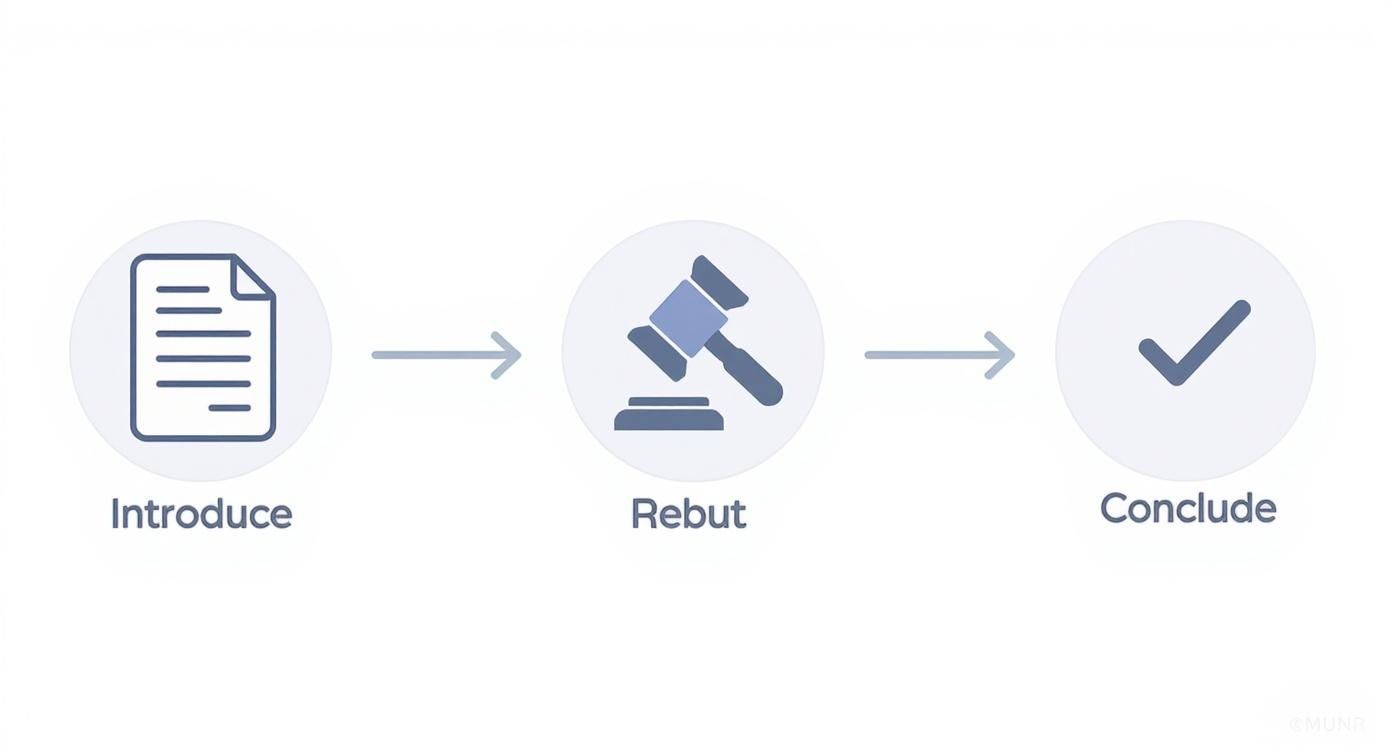
As you can see, a structured argument—introducing the issue, methodically rebutting the denial, and ending with a clear request—creates a logical and persuasive case for the reviewer.
To help you understand the two main phases of this fight, here's a quick side-by-side comparison of the internal appeal versus the external review.
Colorado Insurance Appeal Stages At a Glance
| Feature | Internal Appeal (With Insurer) | External Review (State Level) |
|---|---|---|
| Who Decides? | A different department within your insurance company. | A neutral, state-certified Independent Review Organization (IRO). |
| Your Role | Submit a detailed appeal letter with new evidence and arguments. | File a formal request with the Colorado Division of Insurance. |
| Binding Decision? | No. The insurer can still uphold their original denial. | Yes. The IRO's decision is legally binding on the insurer. |
| Timeline | Typically 30-60 days for a decision. | You have 4 months after final denial to file. Review takes weeks. |
| Goal | To get the insurer to reverse its own decision based on new info. | To get an impartial, binding ruling from an outside expert. |
This table makes it clear how the process escalates, giving you more power as you move forward. Don't be intimidated by the formality of an external review; it's a consumer protection designed specifically for you.
The sad reality is that most people never get this far. The statistics are shocking: globally, a mere 0.1% of denied in-network claims are ever appealed. This happens even though nearly half are overturned internally and another 27% succeed at the external appeal stage. You can read our full analysis on insurance claim payout statistics to see just how many billions in benefits are left on the table every year.
When Should You Call a Denver Personal Injury Attorney?
You’ve done everything right. You gathered your evidence, wrote a powerful appeal letter, and tried to navigate the insurance company’s internal review process. While many people can handle these first steps on their own, there are moments when the fight shifts. The insurance company’s tactics suddenly change, and you realize you're no longer on a level playing field.
Knowing these red flags is crucial.

Hiring a personal injury attorney isn’t giving up. It’s a strategic decision to bring professional firepower to your side, especially when the stakes are high and the insurer decides to play hardball.
Red Flags That You Need Legal Help—Now
Some denials are more than just a simple disagreement; they’re complex legal and medical battles that are nearly impossible to win without an expert in your corner. If you run into any of these situations, it’s time to stop trying to go it alone.
- Your Claim Involves Severe or Permanent Injuries: If your injuries have led to long-term disability, require future surgeries, or have permanently changed your quality of life, your claim is worth a substantial amount. Insurers fight these high-value claims relentlessly. You need an attorney who can accurately calculate future damages and fight for the full compensation you deserve.
- The Denial Is Packed with Legal Jargon: When the denial letter starts quoting specific Colorado statutes, citing obscure case law, or hiding behind confusing policy exclusions, the insurer has shifted the fight to their home turf. They are essentially daring you to engage in a legal debate they know you aren't equipped to handle.
- The Insurer Is Blaming You for the Accident: Is liability being contested? This is common in complex Denver car accidents where fault isn't 100% clear. You need an advocate who can gather accident reconstruction evidence, track down and interview witnesses, and build a powerful case that proves the other party's negligence.
Understanding when you're out of your depth is the first step. For more guidance, check out our detailed article on how to choose the right personal injury attorney for your specific needs here in Colorado.
Is the Insurance Company Acting in Bad Faith?
Sometimes, a denial isn’t just a disagreement. It’s a sign of something much worse. Insurance bad faith is when an insurer acts dishonestly or unfairly to avoid paying a legitimate claim—violating their contract with you. Colorado law provides strong protections for consumers against these predatory tactics.
At Conduit Law, we see bad faith tactics all the time. It’s not just about denying a claim; it’s about how they do it. Unreasonable delays, refusing to give you a straight answer, or making insulting lowball offers are all classic signs the insurer is not playing fair.
Keep an eye out for these warning signs:
- Unreasonable Delays: The adjuster drags their feet for months without a legitimate reason, clearly hoping you'll get frustrated enough to give up.
- Misrepresenting Your Policy: They intentionally twist the language in your policy documents to justify a denial that isn't valid.
- Refusing a Proper Investigation: They fail to review all the evidence you submitted or flat-out ignore the medical records that support your claim.
- Making a "Lowball" Offer: They offer you a settlement that is insultingly low and nowhere near what your claim is actually worth.
If you suspect bad faith, the game has fundamentally changed. This is no longer just about the initial claim; you may be entitled to damages beyond your original policy limits. This is a serious legal matter that absolutely requires a skilled Denver personal injury lawyer.
How Conduit Law Levels the Playing Field
When you bring an experienced firm like Conduit Law into the fight, the dynamic with the insurance company shifts immediately. We take the entire burden off your shoulders so you can finally focus on what matters most: your recovery.
From the moment we take your case, we handle every single communication with the insurer. No more frustrating phone calls or confusing letters. We manage the paperwork, craft the legal arguments, and take over the aggressive negotiations, all while using our technology-driven approach to keep your case moving forward efficiently.
Our team prepares every single case as if it’s headed to trial. This approach sends a clear and powerful message to the insurance company: we will not back down, and we are not afraid to take this fight to a courtroom if you refuse to be reasonable. More often than not, that readiness to litigate is the only thing that forces an insurer to the negotiating table with a fair offer.
Your Top Questions About Insurance Appeals, Answered
When you're fighting a denied claim, questions pop up at every turn. It's completely normal to feel a bit lost. Here are some straightforward answers to the questions we hear most often from people in Colorado who are challenging an insurer's decision.
How Long Do I Have to File an Appeal in Colorado?
In Colorado, the general rule is that you have 180 days—about six months—from the day you get that denial letter to submit your internal appeal. But treat that as a guideline, not a guarantee. Your specific policy might have a shorter window.
This is one deadline you absolutely cannot miss. Your denial letter and policy documents are your source of truth here, so read them immediately and find that date. If you let that deadline slip by, you could lose your right to appeal entirely. If you're cutting it close, you need to talk to an attorney right away to preserve your options.
What Does Insurance Bad Faith Mean?
"Bad faith" is more than just a disagreement over a claim. It’s a legal term for when an insurance company unreasonably dodges its responsibilities to you under your policy. You paid your premiums, and you trusted them to be there. Bad faith is a violation of that trust.
Here in Colorado, bad faith can look like a lot of different things:
- Unreasonable Delays: Purposefully dragging out the investigation or the appeal process for no good reason.
- Failure to Communicate: Going silent, ignoring your calls, or refusing to give you a clear reason for the denial.
- Misrepresenting Your Policy: Twisting the words in your policy to make it seem like your claim isn't covered when it should be.
- Offering an Unfair Settlement: Throwing out a "lowball" offer that doesn't even come close to what your claim is actually worth.
If this sounds familiar, start documenting every single interaction. Bad faith is a serious issue, and it can entitle you to damages that go far beyond what your original claim was worth.
Can I Appeal a Denial for a Pre-Existing Condition?
Yes, you can, and in many cases, you absolutely should. Thanks to the Affordable Care Act (ACA), it is flat-out illegal for a health insurance company to deny you coverage or refuse to pay a claim because of a pre-existing condition. That protection is a bedrock of modern health law.
Now, for other policies like disability or accident insurance, the situation depends on the fine print in your contract and what you disclosed when you signed up. If you've been denied for this reason, pull out your policy and review it carefully. Insurers make mistakes all the time when applying these rules. A well-argued appeal, backed by solid evidence, can often get these decisions overturned.
Our Experience: We've seen insurers try to link an old, unrelated injury to a new accident claim to avoid paying. A strong appeal, supported by clear medical evidence showing the new injury is distinct, is the key to defeating this tactic.
What Happens if My External Appeal Is Also Denied?
If you've gone through the whole process and an independent, external reviewer still sides with the insurance company, your next—and usually final—option is to file a lawsuit. This is the point where you leave the administrative appeals world and enter the formal court system.
Taking an insurance company to court is a major step, and it’s not something you should do without an experienced trial lawyer in your corner. An external denial is often the clearest sign you'll get that the insurer is digging in its heels and won't pay unless they're forced to by a judge or jury. When you reach this point, it's time to consult with a firm that can assess the strength of your case and prepare for a real legal battle.
Let Conduit Law handle the legal complexities while you focus on recovery. If you're facing a denied insurance claim in Denver, our experienced team is ready to fight for you. We level the playing field against insurance giants and aren't afraid to take your case to court to secure the compensation you deserve.
Get a free case evaluation from Denver's experienced personal injury attorneys. Call Conduit Law at (720) 432-7032 or contact us online. https://conduit.law
This blog post is for informational purposes only and does not constitute legal advice. Every personal injury case is unique, and past results do not guarantee future outcomes. Contact Conduit Law for a free consultation.
Written by
Conduit Law
Personal injury attorney at Conduit Law, dedicated to helping Colorado accident victims get the compensation they deserve.
Learn more about our team