Table of Contents
You were trapped. A violent, final jolt. Then another. And another. A cascade of metal and shattered glass somewhere on I-70, maybe on the approach to the Eisenhower Tunnel or the descent from Vail Pass.
In the swirling snow and confusion, the finger-pointing began immediately. Every driver blames the one behind them. Insurance companies thrive on this chaos—they count on it. They want you overwhelmed, hurt, and ready to accept a pittance because untangling the truth seems impossible.
They’ll call it an “unavoidable accident.”
This is a calculated lie. Pileups are not “accidents.” They are the predictable result of multiple, distinct acts of negligence. Speeding. Following too closely. Distraction. Compounded by potentially hazardous road conditions that someone—perhaps CDOT—was responsible for.
Litigating an I-70 pileup means you need more than a car accident lawyer. You need a forensic investigator ready to sue multiple drivers, powerful trucking companies, and, when necessary, the State of Colorado. As a multi-car pileup lawyer specializing in I-70 Colorado crashes, my firm’s job is to deconstruct that chain reaction with surgical precision. We don’t just see one big wreck. We see every individual failure—and we hold every single negligent party accountable.
We unscramble the chaos they try to hide behind.
The Trick Insurance Companies Don’t Want You to Know
The first call you get won't be from a friend. It will be from an insurance adjuster for one of the other twenty cars. They’ll sound kind. Empathetic, even. Then they’ll deliver the line—the one they’re trained to repeat until you start to believe it’s true.
They will call the pileup an "Act of God." An "unavoidable accident."
This isn’t their opinion. It's a strategy—a cynical script designed to make you give up before you begin. Their business model is built on one powerful lie: that the chaos of a multi-car pileup is simply too messy to untangle, so you should accept their insulting first offer and be grateful.
We don’t just reject that idea. We dismantle it.
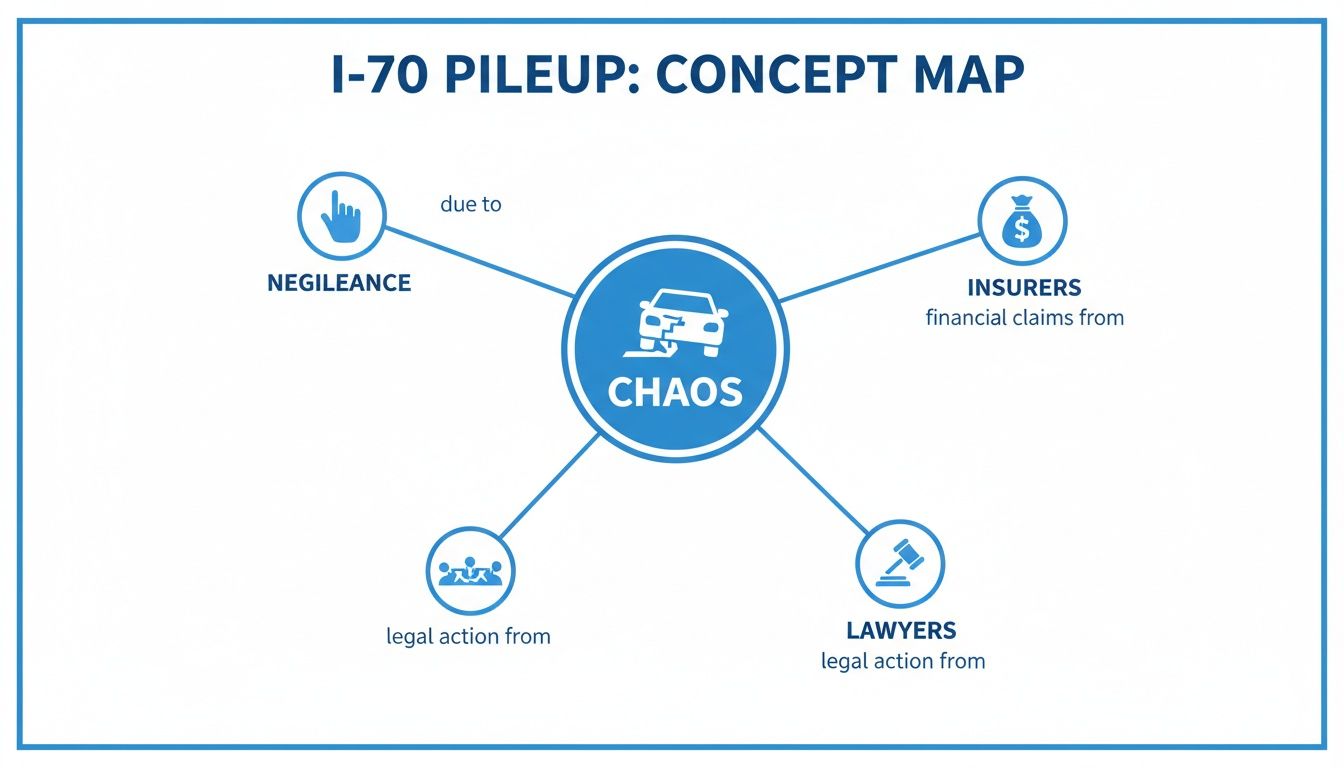
We show the chain reaction wasn't random chance, but a direct result of specific, provable bad decisions.
How We Unscramble Negligence With Science
We don’t get into shouting matches with adjusters. There's no point. We present them with irrefutable, science-backed proof of their insured’s negligence. Our process is aggressive, systematic, and leaves zero room for their excuses.
This is how we build an airtight case against every at-fault party:
- Accident Reconstruction: We hire forensic engineers to create a physics-based, 3D model of the crash. They analyze vehicle damage, debris fields, and skid marks to prove who hit whom, in what order, and at what speed. No more finger-pointing—just physics.
- EDR/“Black Box” Data: We immediately secure the Electronic Data Recorder from every vehicle possible. This gives us a second-by-second account of speed, braking, and steering. It’s the objective truth that shows who was speeding or failed to react at all.
- CDOT & State Records: The "unavoidable ice" defense crumbles when we subpoena CDOT’s traffic camera footage, plow deployment schedules, and road treatment records. We find out if they knew about the hazardous conditions and failed to act.
- Witness Testimony: We track down the dozens of witnesses and drivers involved before their memories fade, locking in testimony that corroborates the forensic data.
Colorado’s Comparative Negligence Rule Is Your Shield
The insurance adjuster desperately wants you to believe that if you share even 1% of the fault, your claim is dead. That is unequivocally false.
Colorado operates under modified comparative negligence. This law is your power.
Under C.R.S. § 13-21-111, you can recover damages as long as a jury finds you are less than 50% at fault. Your final compensation is simply reduced by your percentage of fault.
If you have $500,000 in damages and are found 10% at fault, you still recover $450,000. The insurers will never explain this nuance. They will imply any fault is a total barrier because that serves their bottom line, not yours. You can read more about this in our guide to the statute of limitations in Colorado for personal injury.
We take the chaos they hide behind and turn it into a crystal-clear map of liability. We make them pay for the choices they made. Want to learn more? You can discover more insights about the dangers of multi-vehicle collisions on Wikipedia.
The Government’s Secret Deadline That Will Kill Your Case
This might be the most important thing you read.
What if the I-70 pavement itself was part of the problem? A patch of untreated black ice on Vail Pass? A faulty guardrail? A negligent CDOT snow plow operator? You may have a claim against a government entity.
And this is where the game gets incredibly dangerous, incredibly fast.
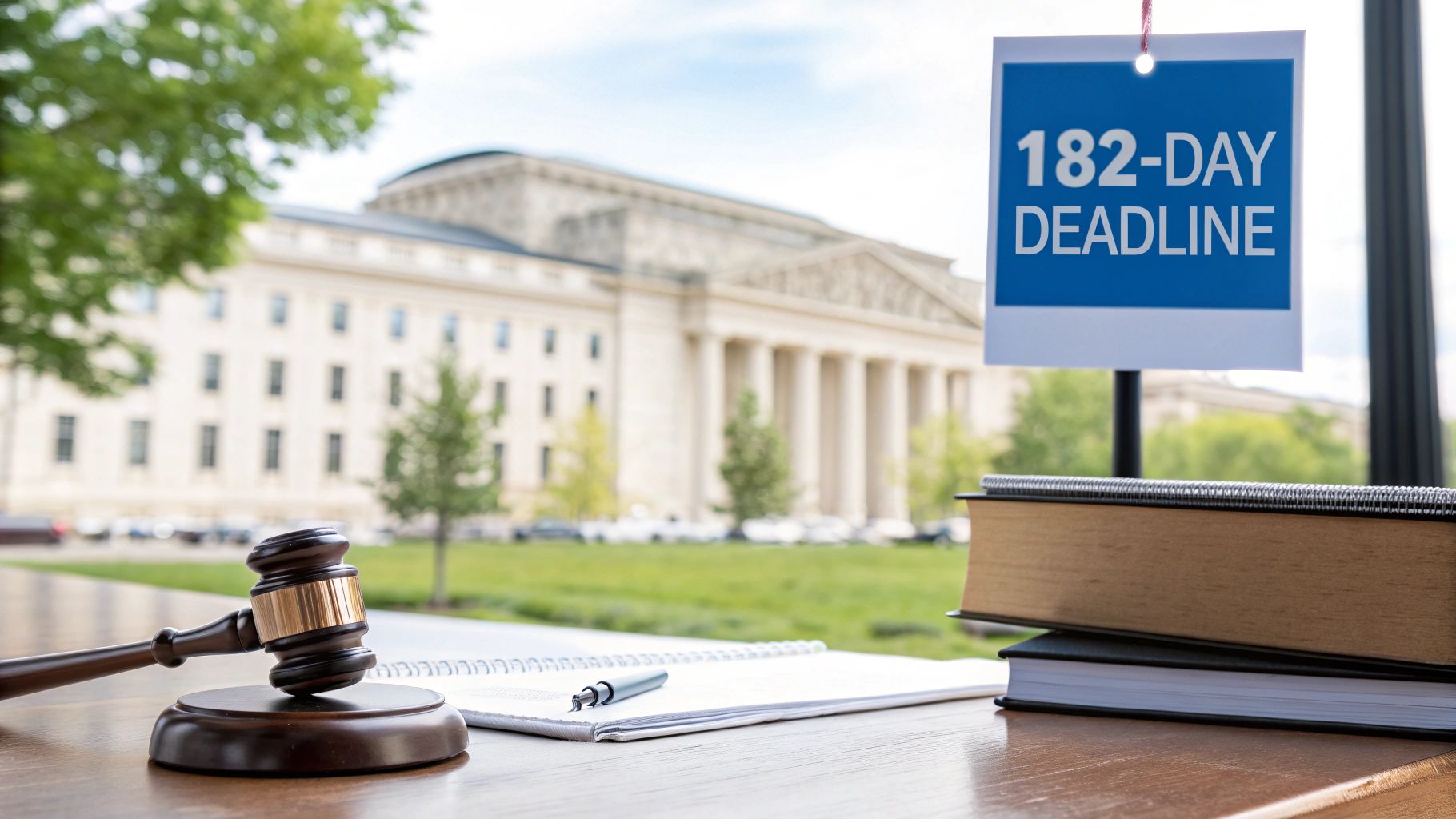
The Colorado Governmental Immunity Act (CGIA) is a legal fortress built to shield the government from lawsuits. To have any chance, you must follow its ruthless rules.
The 182-Day Guillotine
You have exactly 182 days from the date of your injury to file a formal, written Notice of Claim with the right government agency. Not 183. One hundred and eighty-two, period.
Miss this deadline by a single minute, and your right to sue the government vanishes. Forever.
The other driver's insurance company will gladly let you negotiate past the six-month mark. They will happily drag out negotiations, letting you think you’re making progress while this secret clock ticks down to zero, extinguishing your potentially largest claim.
It’s a dirty, cynical, and brutally effective tactic.
When You Can Actually Sue CDOT
Governmental immunity is the default. To get around it, your case must fit a narrow exception. For an I-70 pileup, two are most relevant:
- A Dangerous Condition of a Public Highway: This applies when the government knew or should have known about a problem—like untreated ice or a faulty traffic signal—and failed to fix it.
- Negligent Operation of a Motor Vehicle by a Public Employee: This is for when a government employee, like a CDOT snow plow driver, causes a wreck through their own carelessness. In tragic cases, we may even need to use private autopsies in wrongful death cases to prove the exact cause of death.
Navigating the CGIA is not for a general practitioner. It demands a lawyer who has specific experience suing government entities in Colorado.
How We Fight The Trucking Industry’s Legal Armies
When a semi-truck is part of an I-70 pileup, the game changes. While you’re still at the scene, the trucking corporation has already deployed its rapid-response team of investigators and lawyers. Their only job: control the narrative and build a defense before you’ve even seen a doctor.
To beat them, you need a lawyer who not only understands their playbook but has the resources and the grit to dismantle it.
We Sue The Corporation, Not Just The Driver
The person behind the wheel is often just the final link in a chain of corporate negligence. We go straight to the top, targeting the company's systemic failures.
This is where federal law becomes our weapon. We use regulations from the Federal Motor Carrier Safety Administration (FMCSA) to expose a pattern of recklessness.
- Hours of Service: Was the driver dangerously fatigued? We subpoena electronic logging device (ELD) data to find out.
- Vehicle Maintenance: Were the brakes and tires properly maintained? We demand the complete service logs.
- Hiring and Training: Did the company hire a driver with a history of safety violations? We tear apart their driver qualification file.
By proving these systemic failures, we use powerful legal doctrines like vicarious liability to hold the multi-million-dollar corporation directly accountable. This strategy opens up much deeper pockets and applies far greater pressure. Need more info? See our guide on what to do after a truck accident.
Your First Steps To Seizing Control After The Crash
In the dizzying chaos after a pileup, what you do next is critical. Insurance companies are counting on your confusion. This is how you take back control.
Prioritize Health, Then Evidence
First, get medical attention. Adrenaline masks serious injuries. Any gap in treatment is a gift to an insurance company. Go to an ER or urgent care and get everything on record.
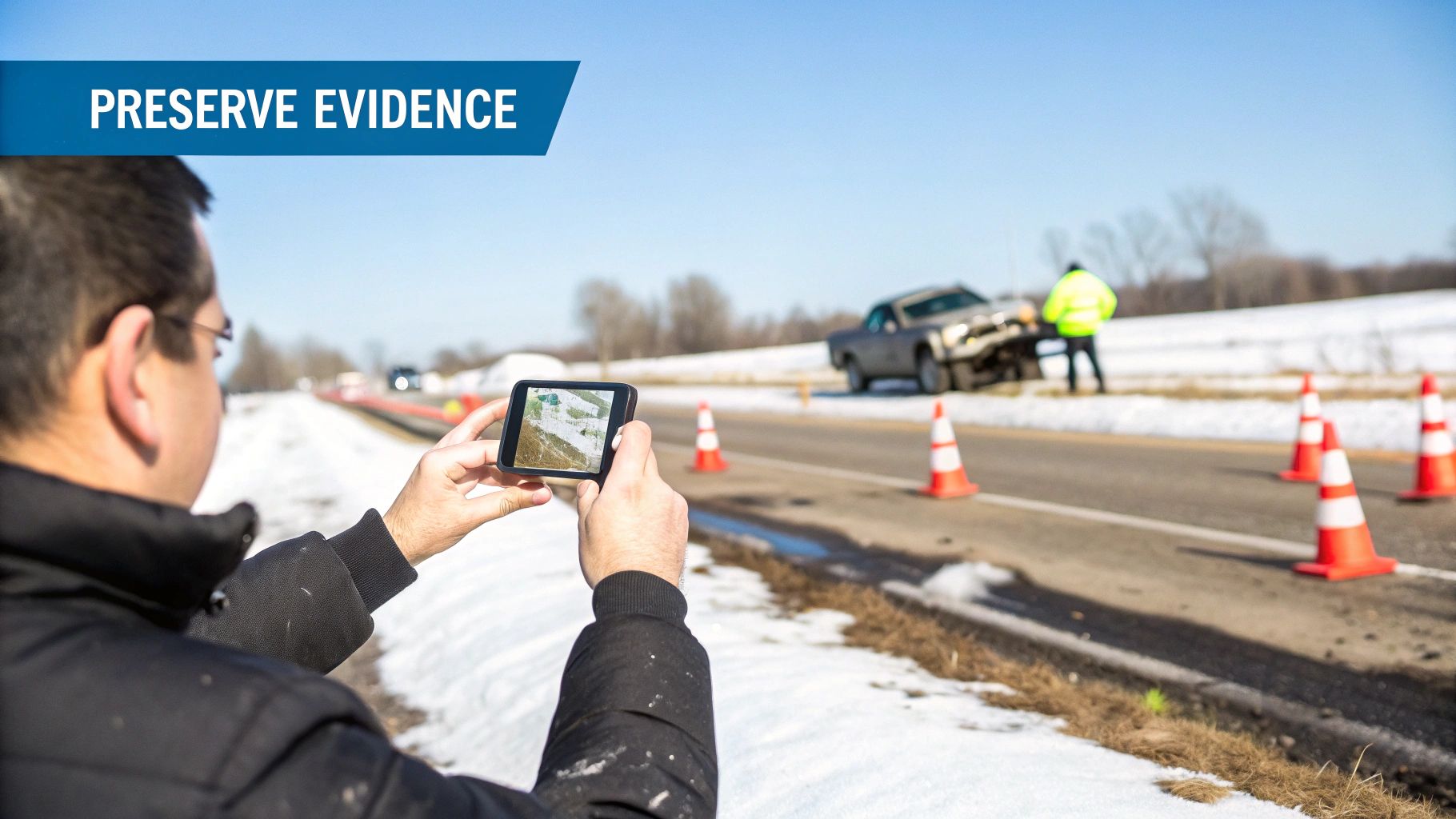
Next, if you are able, document everything. Use your phone to take pictures and videos of the entire scene, specific damage to all cars, and the road conditions. Get names and phone numbers for every driver and witness you can.
Protect Your Legal Rights
Do not—under any circumstances—give a recorded statement to any insurance company. Not the other driver’s, and not even your own. Adjusters are trained to ask tricky questions designed to lock you into a narrative. A simple "I'm sorry" will be twisted into an admission of fault.
They’ll tell you it’s “just for their file.” It's not. It's a cross-examination you aren't prepared for, conducted by someone whose only job is to pay you as little as possible.
Finally, and most urgently, contact a multi-car pileup lawyer for I-70 Colorado crashes immediately. That 182-day CGIA clock may already be ticking. Waiting is the single most damaging mistake you can make. Find more tips in our guide for what to do after a car accident.
On top of everything, you may also have to fight your own health insurer. It's infuriating, but worth learning how to appeal a health insurance denial.
| Action Item | Why It's Important |
|---|---|
| DO seek immediate medical attention. | Creates an official record of your injuries. |
| DON'T apologize or admit fault. | "I'm sorry" will be used against you as an admission of liability. |
| DO document everything with photos/videos. | Captures crucial evidence before the scene is cleared. |
| DON'T give a recorded statement to any insurer. | Adjusters use these to lock you into a story that can hurt your claim. |
| DO contact a lawyer immediately. | Critical deadlines (like the 182-day CGIA notice) can pass quickly, barring your claim forever. |
Straight Answers to Your I-70 Pileup Questions
After a massive pileup, the questions pile up faster than the cars did. Let's cut through the noise. No legal jargon—just the information you need.
How is fault figured out in a chain-reaction crash?
Insurance companies thrive on this chaos. We don’t guess who’s at fault—we prove it with science.
- Accident Reconstruction: We hire top-tier engineering experts to recreate the crash, showing who hit whom, when, and how fast.
- Evidence Preservation: We immediately secure CDOT footage, witness statements, and EDR data before it "disappears."
- Applying Colorado Law: We use Colorado's modified comparative negligence rule to assign a percentage of fault to every single careless driver. As long as you are less than 50% at fault, you can recover damages.
A pileup isn't one big accident. It's a chain of individual failures, and our job is to meticulously prove each one.
What happens if the driver who hit me is uninsured?
This is what your Uninsured/Underinsured Motorist (UM/UIM) coverage is for. It steps in to cover your damages when the at-fault driver can't pay. But be warned: when you file a UM/UIM claim, your own insurance company—the one you faithfully paid—suddenly treats you like an opponent. We step in and force them to honor the policy you paid for.
What if I can’t afford a lawyer for a complicated pileup case?
You can. It costs you nothing out of pocket. Conduit Law works on a contingency-fee basis.
- No Upfront Fees. Ever.
- We Fund the Entire Fight. We cover all costs for experts, investigators, and court filings.
- We Only Get Paid If We Win. Our fee is a percentage of the money we recover for you. If we don’t win, you owe us nothing. Period.
This model aligns our goals perfectly with yours. It ensures justice isn't just for those who can afford it.
The information on this website is for general information purposes only. Nothing on this site should be taken as legal advice for any individual case or situation. This information is not intended to create, and receipt or viewing does not constitute, an attorney-client relationship.
You have questions. I have answers. The initial consultation is always free, and it’s the first step toward taking back control. I got you. Call me.
Conduit Law | Schedule Your Free Consultation
Written by
Conduit Law
Personal injury attorney at Conduit Law, dedicated to helping Colorado accident victims get the compensation they deserve.
Learn more about our team