Table of Contents
It starts with a phone call—a Denver Police officer on the line, talking about an accident on I-25. In that one gut-wrenching moment, your world fractures.
This guide isn’t about trying to replace who you’ve lost—no amount of money ever could. Money is a hollow, inadequate substitute for a human life. We all know that.
But a lawsuit is the only tool the civil justice system gives you to demand accountability. It’s about securing your family’s future and forcing the person/company responsible to answer for what they did.
Suing for wrongful death in Colorado is a multi-stage civil lawsuit. It requires proving the defendant’s negligence, and it demands strict adherence to Colorado’s unforgiving legal timelines. Let’s walk the path together.
The First Hurdles Are the Ones Insurance Companies Hope You Trip On
Let’s be clear—the insurance company is counting on your grief. They’re banking on your confusion to make you miss a critical deadline. It’s a disgusting, yet brutally effective, tactic.
They know you’re disoriented and overwhelmed. They are counting on it.
Don't give them that satisfaction.
Colorado law is absolutely unforgiving on this point. Miss the filing window, and the courthouse doors slam shut forever—no matter how strong your case is. Suing for wrongful death in Colorado means clearing two initial—and absolutely critical—legal hurdles: the Statute of Limitations (the deadline) and Standing (who has the legal right to file).
The Unforgiving Clock: Colorado's Statute of Limitations
The moment your loved one passes away, a clock starts ticking.
Generally, you have a two-year Statute of Limitations (SOL) to file a lawsuit. But—and this is a big one—if the death was caused by a motor vehicle accident, that deadline extends to three years.
A fatal drunk driving crash on I-70? Three years. A fall from poorly maintained scaffolding in Denver? Two years. Get it wrong, and you get nothing.
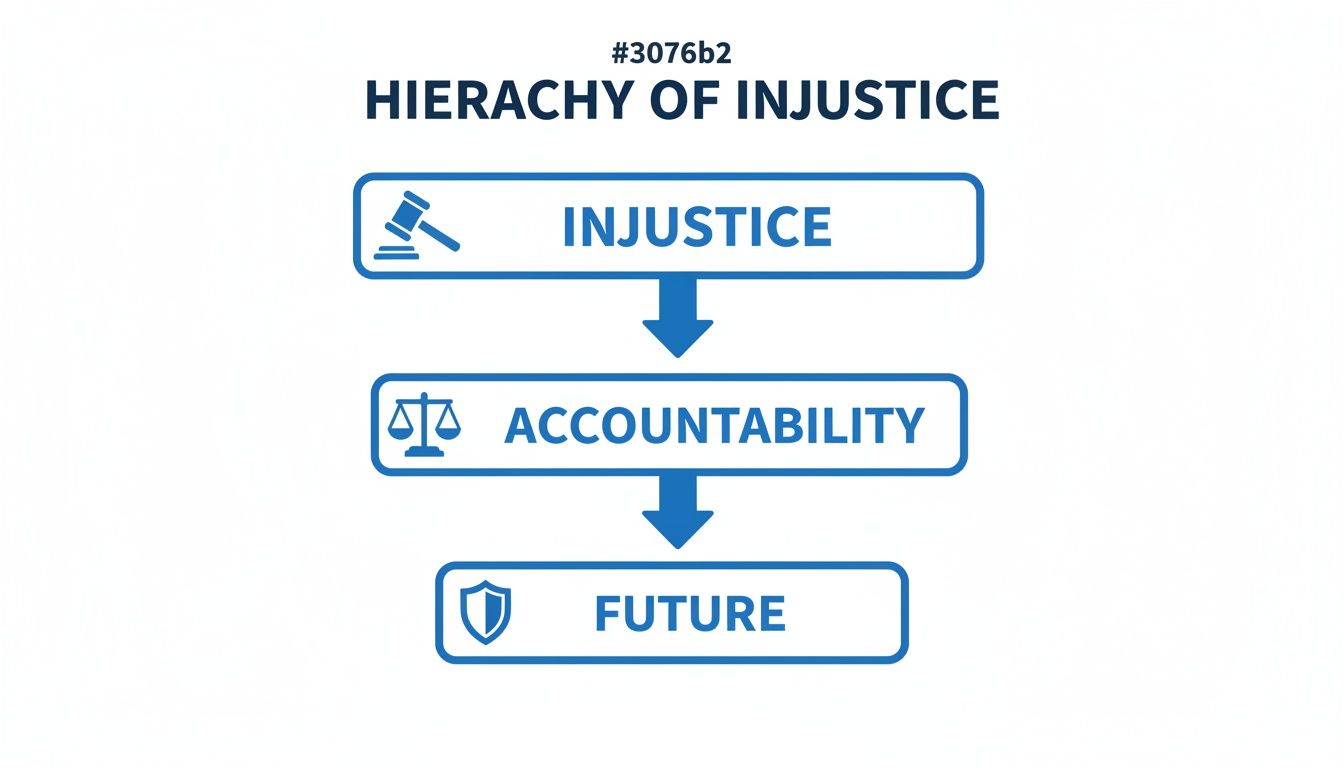
The Rigid Hierarchy: Who Gets to File the Claim
Colorado law also dictates exactly who has the right to file the claim—and when. It’s not a free-for-all; it’s a rigid, tiered system.
During Year One: The surviving Spouse has the exclusive right to file. They can file alone or choose to include the children. No one else has standing.
During Year Two: If the spouse hasn't filed, the right opens up. The Spouse, the Lineal Heirs (children), or a Designated Beneficiary can now file a claim.
This statutory priority creates a strategic timeline that must be followed precisely. Understanding who can file a wrongful death claim in Colorado is the first move on the chessboard.
We Build an Unshakeable Case While You Focus on Family
While you’re grieving, we get to work. Winning isn’t about feelings—it’s about presenting cold, hard, undeniable facts to an insurance carrier or a jury.
We have to prove the same four elements your loved one would have needed to prove in a personal injury claim. Think of them as the legs of a table—if one is weak, the whole case collapses.
Here are the four pillars of the claim:
- Duty: The defendant owed your loved one a legal duty of care—like the duty to drive safely.
- Breach: The defendant violated that duty through a negligent/reckless action—like texting while driving.
- Causation: That breach directly caused the death. The link must be clear and unbroken.
- Damages: The death resulted in quantifiable losses—both financial and emotional—for the survivors.
Our immediate investigative push involves securing police reports from the Denver Police Department (DPD), hiring accident reconstruction experts, and preserving critical evidence before it "disappears." Getting a powerful witness statement locked in early can dismantle an entire defense.
The Litigator's Roadmap: We Demystify the Entire Process for You
The legal system feels designed to intimidate you. It’s not. It’s just a process—and once you have the map, it’s not nearly so frightening.
Here is the five-stage roadmap we use to navigate the Denver courts and build your case for maximum recovery.
Stage 1: The Investigation
This is the foundation. We secure DPD reports, depose witnesses, and hire forensic experts to build an ironclad case before the other side even knows what’s coming.
Stage 2: Filing the Lawsuit
We file a formal complaint with the Denver District Court. This is a public declaration that puts the defendant on the clock and forces them to engage. It’s the opening shot.
Stage 3: The Discovery Gauntlet
This is where cases are won—a 6-12 month process where both sides must show their cards. We use depositions and document requests to expose every weakness in their case and lock in testimony that helps us.
Stage 4: The Mediation Push
After discovery, over 95% of cases settle in mediation. We walk in from a position of power, presenting the mountain of evidence we’ve gathered to show the insurance company the massive financial risk of facing us at trial.
Stage 5: Trial—The Final Showdown
If the insurer refuses a fair offer, we go to trial. We tell your story to a jury of your peers and ask them to deliver the one thing the law can offer—justice.

We Force Them to Pay What the Law Demands—And Then Some
Let’s be direct. The insurance adjuster’s job is to put the smallest possible price tag on the life that was taken. My job is to make them pay every last cent the law allows.
Colorado law breaks down damages into a few key categories.
UNCAPPED Economic Damages: This is the money to cover lost income, benefits, and the value of household services. We use forensic economists to project these losses over a lifetime, and there is no legal limit on this recovery.
CAPPED Non-Economic Damages: This is for the human toll—the grief, sorrow, and loss of companionship. For cases filed in 2025, this amount is capped at ~$2.125 million. We fight to show why your family deserves the maximum compensation allowed. You can learn more in this detailed legal analysis.
Punitive Damages: In cases of egregious conduct—like a fatal DUI accident—we pursue punitive (or exemplary) damages. These aren’t to compensate you; they are to punish the defendant and deter others from similar reckless behavior. This is the ultimate form of accountability.
The Last Step is Securing Your Family’s Future
Winning the case isn’t the finish line. The final, critical step is ensuring the funds are distributed fairly and protected for the long term.
A Colorado Probate Court often must approve the final settlement distribution. This ensures fairness among all heirs—the spouse, children, and parents.

For any minor children, we establish a protected financial structure—like a conservatorship or a trust. This is non-negotiable. It safeguards their inheritance for college, a first home, and a secure future. Considering advanced estate planning strategies is a smart way to ensure this recovery lasts a lifetime.
Disclaimer: This blog post is for informational purposes only and does not constitute legal advice. The information provided is not a substitute for consulting with a qualified attorney. The specific facts of your case may impact the application of the law, and you should not act or refrain from acting based on this information without first seeking professional legal counsel. The use of this website does not create an attorney-client relationship between you and Conduit Law.
Let’s talk. Call my office, and we'll set up a time to go over everything, free of charge. I’ve got you.
Written by
Conduit Law
Personal injury attorney at Conduit Law, dedicated to helping Colorado accident victims get the compensation they deserve.
Learn more about our team